Field guide / Check close to departure
Conditions are route information.
Icelandic winter weather can shift over short distances and within a travel day. Snow, sleet, rain, freezing conditions and wind can affect both the road surface and how well a driver can see. This page explains what to consider; it is not a forecast, warning service or live road report. Never use it to decide that a road is open or safe.
Check current local weather and road information immediately before departure. Recheck when a route changes, a delay develops or conditions look different from the plan. Use authoritative current sources for the relevant area and follow restrictions, closures and safety instructions. If information indicates unsafe travel, delay, shorten or cancel the drive.
Weather factors to assess
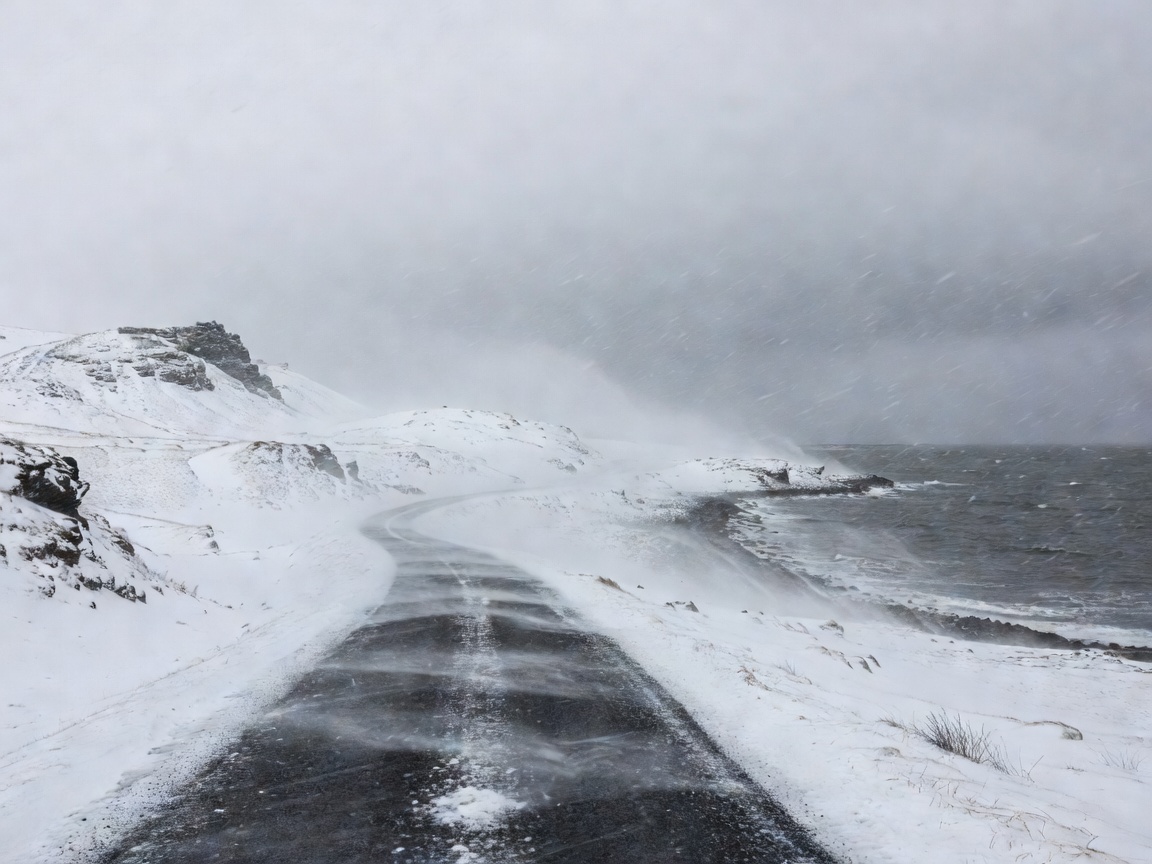
Snow: fresh or drifting snow can obscure markings and change traction. Ice: may be difficult to distinguish from a wet surface and can form in shaded or exposed places. Rain and freezing conditions: can create a changing mix of wet and icy surfaces. Wind: affects comfort and vehicle control on exposed roads. Visibility: blowing snow, cloud, spray and darkness reduce the time available to respond.
Conditions in one settlement do not describe the full route. Coastal exposure, elevated terrain and sheltered valleys may differ. A clear view at departure does not guarantee similar conditions at the destination. Check conditions for all major route segments and the return, not only the point of interest.
Road surfaces can change
Road surfaces may move between clear, wet, slushy, snowy and icy sections. Bridges, shaded areas, elevation changes and exposed stretches can behave differently from nearby roads. A route can become slower or unsuitable without a long warning period. Leave time and distance between the plan and the limit of the daylight window.
Do not treat a map, navigation estimate or previous trip report as proof of current access. Closures and restrictions must be respected. Never drive around barriers or continue because accommodation or a booked activity is waiting. If the route is not appropriate, stop at a safe permitted place, revise the plan and contact providers as needed.
Exposure: coast and mountain
Coastal roads can be exposed to crosswinds and changing precipitation. Mountain roads and passes can have different visibility, snow cover and temperatures than lower areas. Some routes are seasonal or subject to specific access limitations. Do not assume a road is suitable because it appears on a map or was used in another season.
Stopping also requires judgement. Use designated or otherwise safe permitted places. Avoid narrow shoulders, blind corners and locations where a person or vehicle creates a hazard. Do not use a roadside viewpoint if access is unsafe, and do not cross a road or barrier for a photograph.
Daylight and delays
Daylight hours vary substantially through winter. Check sunrise and sunset for the date and region. Weather delays, slower surfaces, breaks and restricted access can consume the available light. Build a buffer into arrival time, keep overnight options practical and avoid an itinerary that depends on every segment proceeding without delay.
Seasonal comparisons are useful only as broad planning context: midwinter generally offers less daylight than the shoulder periods, while weather remains variable throughout the season. Do not use a seasonal description as a current condition report or a substitute for a date-specific check.
Weather checklist
- Check current information for the route, destination and return before leaving.
- Review wind, precipitation, visibility and changing conditions along the way.
- Check for warnings or advisories and follow their instructions.
- Compare expected conditions with the driver’s experience and vehicle suitability.
- Set a clear no-drive, wait or turn-back decision before departure.
Road-condition checklist
- Confirm current access status and any restrictions for every planned segment.
- Do not bypass closures, barriers or road controls.
- Allow for changing surfaces, reduced traction and additional stopping distance.
- Identify safe legal stopping options and an alternative overnight plan.
- Recheck after a significant delay or change in route.
Seasonal comparison without false precision
Early and late winter can offer different daylight windows from the middle of the season, but no broad seasonal label tells you whether a specific road is usable today. Snow, rain, ice, wind and visibility depend on the date and location. Make date-specific checks; do not rely on averages or anecdotes as live guidance.
Current information matters because conditions and road access are operational facts, not fixed features of an itinerary. Check close to departure and continue to respond to changes. If the information is unavailable, unclear or concerning, choose the conservative option. A delayed or cancelled stop is a reasonable outcome.
Good For
- Travelers deciding whether a route should be shortened or postponed.
- Drivers building a repeatable pre-drive conditions check.
- Anyone comparing coastal, elevated and sheltered route exposure.
What To Know
- This site does not show live forecasts, alerts, closures or road status.
- Verify current local information immediately before driving.
- Follow official restrictions and do not bypass road barriers.
- Change or cancel plans when conditions make travel unsafe.
For driver and vehicle planning, read Winter Driving Planning. For a route framework, see Iceland Winter Routes. For a general enquiry or correction, use Contact.