Field guide / Practical preparation
Prepare for a slower, changeable day.
A winter road trip needs more than a route saved to a phone. Prepare clothing, food, water, communications, navigation, vehicle details, accommodation and a plan for changing conditions. Keep frequently needed items easy to reach. Store loose equipment so it cannot move around the vehicle or obstruct the driver.
Preparation does not make severe weather safe. Check current local road and weather information immediately before departure. If travel is unsafe, delay, change the plan or cancel. Never bypass a barrier or continue because a booking or photo opportunity is waiting.
Clothing and personal supplies
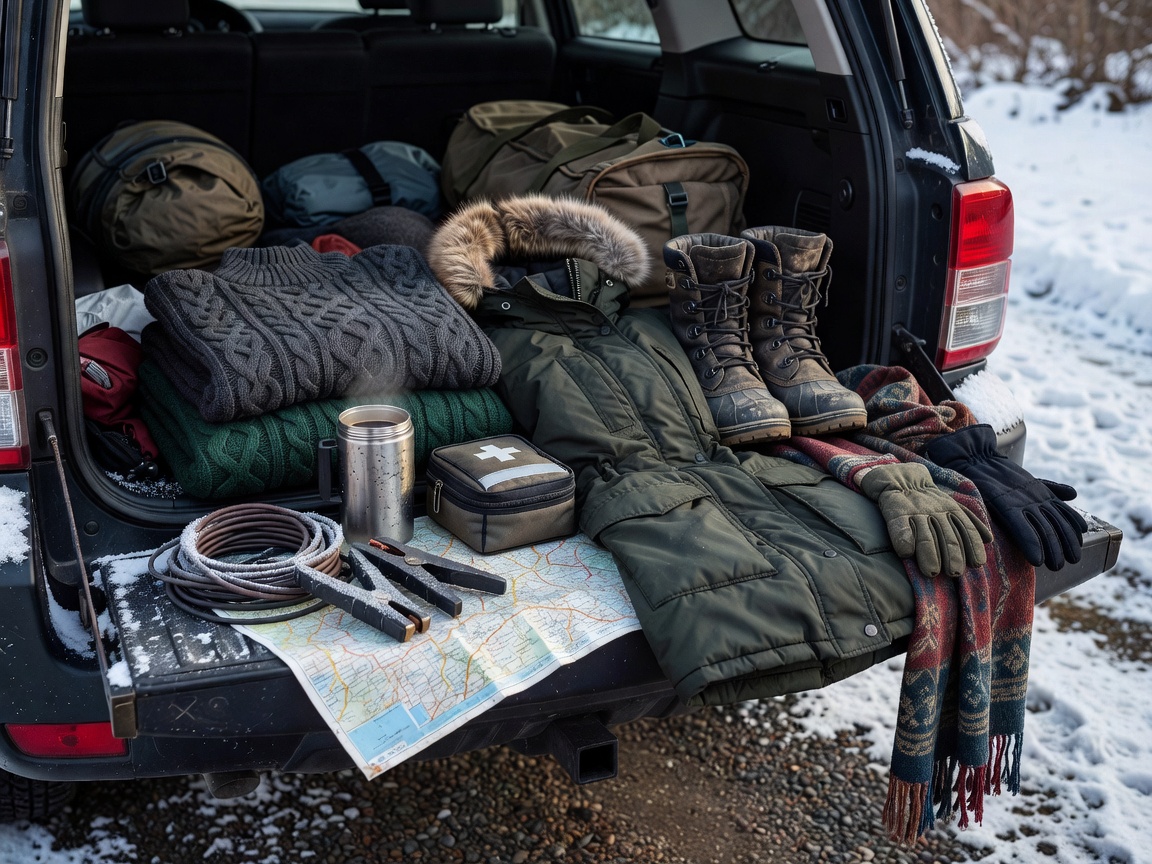
Use layers that can be adjusted as conditions change. Include warm outer layers, insulating mid-layers, a hat, gloves and footwear suited to cold, wet or slippery ground. Keep spare dry layers accessible rather than packed beneath all luggage. Dress for short periods outside the vehicle, not only for the drive.
Carry drinking water and food that can be stored safely and used without relying on an open shop or café. Keep personal medication and essential items available to the people who need them. Consider each traveler’s needs, including children or anyone who may be more affected by cold or delays. Do not leave people unattended in unsafe conditions.
Phone, charging and navigation
Start with a charged phone and an appropriate charging cable or backup power source. Keep the device accessible without handling it while driving; set navigation before moving. Prepare an offline navigation option where available, and save the route, overnight addresses and relevant contact details. Phone coverage and battery performance may vary, so do not make one device the only part of the plan.
Share your intended route and expected check-in time with a trusted person. Tell them how you will update the plan if it changes. Use hands-free or safely parked operation as required by local rules. If conditions change, stop only in a safe permitted location before handling devices.
Vehicle checks and provider information
Understand vehicle controls, lights, heating, demisting, wipers and the agreed roadside assistance process. Confirm suitable seasonal tyres, permitted road use, insurance conditions and any vehicle restrictions with the provider. Do not assume vehicle type guarantees access or control in winter conditions.
Before departure, check that windows, mirrors, lights and roof are clear. Confirm the vehicle has the equipment and documentation supplied or required for its use. If something appears damaged, unclear or unsuitable, contact the provider before driving. Do not attempt risky roadside repairs or recovery actions beyond your training.
Fuel, charging and overnight planning
Identify fuel or charging stops that fit the route and vehicle, then verify current availability and operating information with the provider. Plan alternatives and keep a reserve. Do not assume a location is open, a charger is compatible or a service is available just because it appears on a map.
Choose accommodation stops that allow the day to end before fatigue becomes a problem. Confirm the reservation, arrival process and cancellation terms directly. Keep an alternative if the route is delayed or conditions change. Do not plan an overnight arrival that depends on driving through unsafe weather or darkness beyond your comfort.
Manage daylight and luggage
Check sunrise and sunset for each date and region. Prioritize essential driving within the available light where practical, leaving buffers for slower progress, breaks and unexpected changes. Keep luggage arranged so warm clothing, water, snacks, phone power and first-use items can be reached without unpacking the vehicle.
Separate items needed inside the cabin from bags that can remain secured in the luggage area. Keep the driver’s space clear. Make sure passengers know where essential supplies are and how to reach them safely when the vehicle is parked.
Pre-drive checklist
- Review current local road and weather information for the route and return.
- Confirm vehicle suitability, tyre arrangements and provider restrictions.
- Check daylight, safe stops, overnight details and route alternatives.
- Charge devices; save navigation, addresses and key contacts.
- Share the route and a reasonable check-in plan.
- Pack warm layers, water, food and necessary personal items.
Packing checklist
- Warm layered clothing, gloves, hat and suitable footwear.
- Spare dry layer, drinking water and practical food.
- Charged phone, charging cable and backup power.
- Personal medication and essential documents.
- Navigation backup and saved accommodation details.
Route checklist
- Set a primary route and a lower-distance alternative.
- Identify a clear point to stop, wait, turn back or cancel.
- Check fuel or charging information and do not rely on one option.
- Keep the schedule flexible enough to skip sightseeing.
- Never drive through a closure or around a road barrier.
Advantages and limitations
A checklist reduces last-minute omissions and makes it easier to adapt when a stop or route changes. It can also help passengers understand the day’s plan. It cannot guarantee vehicle reliability, network access, road access or good weather. Keep decisions grounded in current information and your actual ability.
Good For: travelers preparing a multi-day drive, anyone coordinating several passengers and drivers, and visitors who want a clear fallback before leaving town.
What To Know: packing is not a substitute for safe conditions; accommodation and services must be confirmed directly; road and weather information should be rechecked before each drive.
Pair this list with Winter Driving Planning and Weather & Road Conditions. To choose a practical route shape, see Iceland Winter Routes. Use Contact for website enquiries.