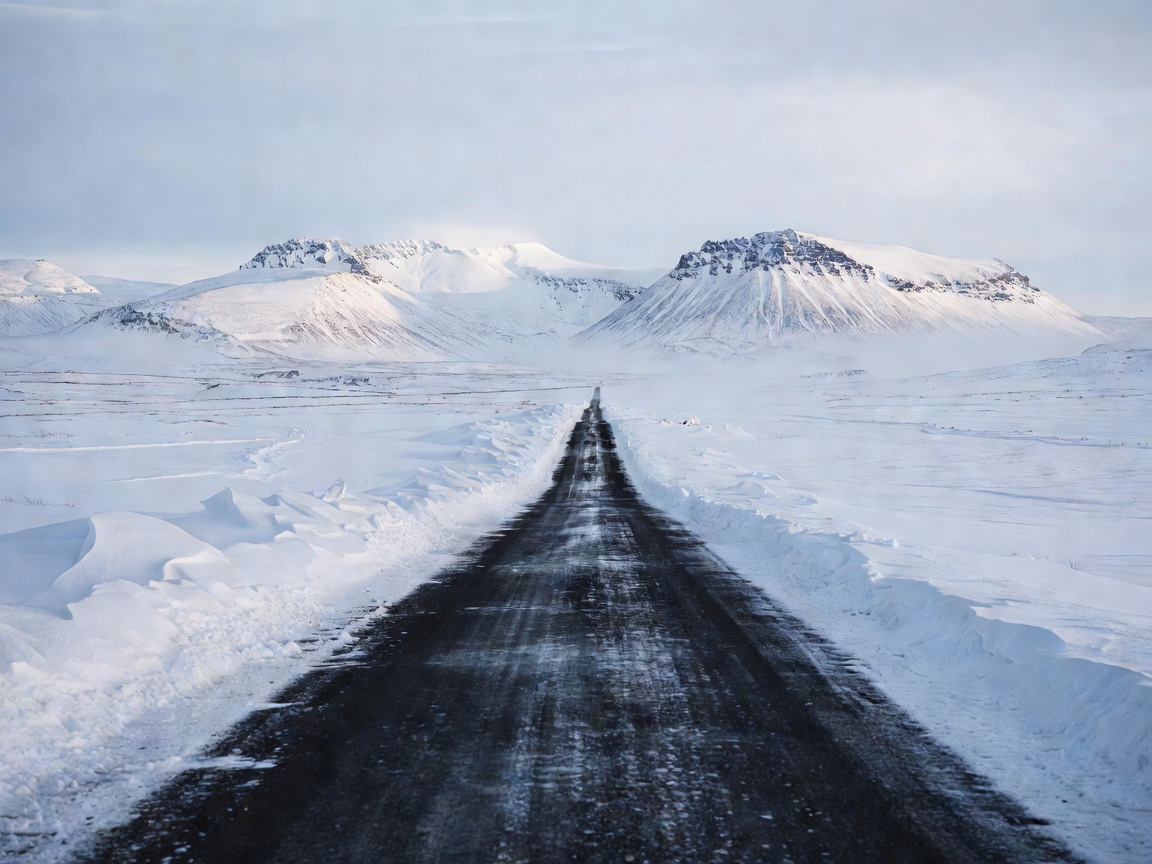
Field guide / Before departure
Make the plan fit the least experienced driver.
Winter driving preparation starts before the vehicle moves. Consider the driver’s experience with snow, ice, wind and low visibility. If winter conditions are unfamiliar, choose a shorter, lower-exposure plan and avoid relying on a demanding route as a learning exercise. A rental vehicle does not remove the need to assess conditions or follow local restrictions.
Set the route, expected daylight window and stop points before departure. Keep enough flexibility to cancel a destination or shorten the day. Check current local road and weather information immediately before driving and again if conditions change. If warnings or conditions make travel unsafe, wait, reroute only where permitted, or cancel.
Vehicle suitability is a planning question
Match the vehicle to the intended roads, season and conditions. Confirm permitted use, tyre suitability, insurance terms and any restrictions directly with the vehicle provider. Do not assume a particular drivetrain or body style makes a road safe. Do not take a vehicle onto roads that are closed, restricted or outside its permitted use.
Before leaving, understand the controls, lights, demisting system and emergency contact process. Check that windows, mirrors and lights are clear and working. Use tyres appropriate to the season and vehicle, as required by local rules and provider terms. If there is uncertainty about the vehicle or its condition, resolve it before setting out.
Visibility, wind and road surface
Snow, rain, spray, darkness and blowing snow can reduce visibility. Clear all windows and lights; keep the windscreen washer and wipers usable. Use lights as required and adjust speed to visibility and surface. Leave more space than you would on a dry road. Ice can be difficult to see, particularly when the surface appears wet or shaded. Bridges, exposed sections and changes in elevation may behave differently from nearby roads.
Wind can affect vehicle stability, especially on exposed sections and when opening a door. Hold doors securely and use designated stopping places. Do not stop in a traffic lane or on a narrow shoulder for a view. Follow any local safety advice, barriers and restrictions. Never continue into conditions that exceed your ability or the vehicle’s suitability.
On snow or ice, stopping distances can increase. Avoid sudden inputs and keep a larger gap; this is general caution, not a substitute for training or official guidance. If control or visibility is uncertain, choose a safe place to stop only where stopping is permitted and safe. Do not attempt risky recovery actions or continue just to preserve an itinerary.
Daylight, fatigue and a realistic pace
Check sunrise and sunset for the actual date and region. Winter daylight varies across the season. Plan the longest road section in the clearest and brightest part of the day where practical. Leave time for breaks, slower progress and an early arrival. Do not schedule a full day around a best-case map estimate.
Fatigue reduces attention and judgement. Share driving only when the additional driver is properly authorized and capable. Stop for rest before concentration drops. Keep accommodation plans realistic, and know how to shorten the day. A missed stop is preferable to rushed or fatigued driving.
Fuel, charging and navigation
Identify fuel or charging options along the intended route and confirm that they fit the vehicle and operating plan. Do not assume an outlet, station or charger is open, available or compatible. Check current provider information, range needs and alternative stopping points. Keep a margin rather than planning to arrive with no reserve.
Use navigation as a planning aid, not a road-status authority. Download or otherwise prepare an offline navigation backup where appropriate, carry a written or saved route outline, and know the address of the next overnight stop. Recheck the route if a road is restricted. Do not use a mapped shortcut to bypass a closure or barrier.
Practical pre-drive checklist
- Check current local road and weather information immediately before departure.
- Confirm vehicle suitability, tyre arrangements and restrictions with the provider.
- Clear windows, mirrors, lights and roof of snow or obstruction.
- Set navigation before moving and share the route with a trusted contact.
- Confirm daylight, safe stops, fuel or charging options and accommodation.
- Carry warm layers, drinking water, food, a charged phone and charging backup.
- Agree a turn-back point and a no-drive decision if conditions deteriorate.
Advantages and limitations
A clear plan reduces avoidable uncertainty: the driver knows the day’s objective, the fallback and the conditions that trigger a change. It also makes it easier to compare a shorter regional trip with a longer route. Planning cannot predict every change, guarantee access or make an unsafe road safe. Current information and sound judgement remain essential.
Good For: drivers building conservative day plans, first-time winter visitors, and travelers comparing vehicle and route requirements before confirming an itinerary.
What To Know: vehicle features do not override restrictions; stopping distance and visibility can change; local road and weather information must be checked close to departure. Never ignore a warning to keep a schedule.
Use the route comparison guide to reduce daily distance. The preparation guide covers packing, communications and contingencies. Contact the guide with a correction or site enquiry through the Contact page.